


Water damage is the silent enemy of every home’s foundation. Whether you’re dealing with a damp basement, pooling water near your foundation walls, or recurring flooding after heavy rain, choosing a perimeter drain system is one of the most critical decisions you’ll make as a homeowner. The right system protects your foundation, prevents mold growth, and preserves your property value for decades. The wrong one can leave you right back where you started — or worse, dealing with costly structural repairs.
This guide walks you through every factor that matters: the types of perimeter drains available, how to evaluate your property’s unique needs, what installation involves, and the mistakes that cost homeowners thousands of dollars every year.
What Is a Perimeter Drain System?
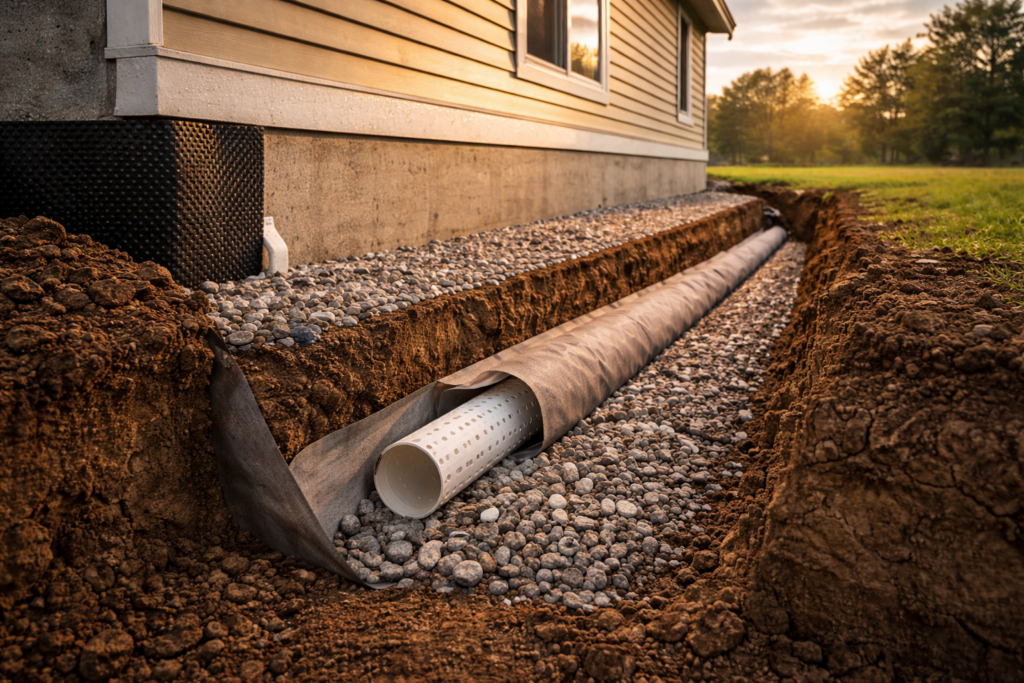
A perimeter drain system is a below-grade drainage solution installed around the interior or exterior perimeter of a building’s foundation. Its job is simple but vital: intercept groundwater before it enters your basement or crawl space and redirect it away from the structure, typically to a sump pump, storm drain, or daylight outlet.
You’ll sometimes hear perimeter drains referred to as French drains, weeping tiles, footing drains, or curtain drains. While these terms are often used interchangeably, there are meaningful differences between them — and understanding those differences is the first step toward making the right choice.
Types of Perimeter Drain Systems
Interior Perimeter Drains
An interior perimeter drain is installed along the inside edge of your basement floor, directly beside the foundation footing. Installation involves cutting a narrow trench into the concrete slab, laying perforated pipe in a bed of gravel, and connecting it to a sump pump system.
Best for: Homes with existing basements where exterior excavation is impractical or too expensive. Interior systems are highly effective at managing hydrostatic pressure that forces water up through the floor and wall-floor joint.
Exterior Perimeter Drains (Footing Drains)
Exterior perimeter drains sit outside the foundation wall at the footing level. They intercept water in the soil before it ever reaches the foundation. Installation requires excavating around the entire perimeter of the home, which makes this approach more disruptive and expensive — but also more comprehensive.
Best for: New construction, major renovations, or homes with severe exterior water problems. Exterior systems stop water at the source and are widely considered the gold standard in foundation drainage.
French Drains (Curtain Drains)
A traditional French drain is a gravel-filled trench with a perforated pipe that redirects surface and shallow subsurface water away from a specific area. Unlike footing drains, French drains are typically installed in the yard rather than directly against the foundation.
Best for: Properties with grading issues, high water tables, or surface water runoff problems that need to be addressed before water reaches the foundation.
Key Factors to Consider Before You Choose
1. Identify Your Water Problem First
Not every moisture issue calls for the same solution. Before investing in any drainage system, determine where the water is coming from. Is it seeping through foundation walls? Rising up through the basement floor? Pooling around the exterior after storms? A professional waterproofing inspection can pinpoint the source and help you avoid paying for a system that doesn’t address the real problem.
2. Soil Type and Water Table
The soil surrounding your foundation plays a significant role in how water behaves. Clay-heavy soils retain moisture and create hydrostatic pressure against foundation walls. Sandy or loamy soils drain more freely but can still channel water toward your home depending on the grading. If your area has a high water table, you’ll almost certainly need a robust system paired with a reliable sump pump.
3. Interior vs. Exterior: Weighing the Trade-Offs
This is the decision most homeowners wrestle with. Here’s a straightforward comparison:
Exterior perimeter drains prevent water from ever reaching the foundation. They also allow you to apply waterproof membranes and dimple board to the exterior foundation wall during installation. However, they require full excavation, which means tearing up landscaping, walkways, decks, and anything else close to the house. Costs typically range from $8,000 to $15,000 or more depending on the home’s size and site conditions.
Interior perimeter drains are less invasive to install and significantly less expensive, usually running between $3,000 and $8,000. They don’t stop water from reaching the foundation, but they do capture it efficiently and route it to a sump pump before it causes damage. For many existing homes, this is the most practical and cost-effective approach.
4. Pipe Material and Design
Modern perimeter drain systems use rigid or flexible perforated pipe, most commonly 4-inch PVC or corrugated HDPE. Rigid PVC is more durable, less prone to crushing, and easier to clean with a drain snake if maintenance is needed down the road. Corrugated pipe is cheaper and easier to work with during installation but can sag and collect sediment over time.
Look for pipe wrapped in a filter fabric sock — this prevents fine soil particles from clogging the perforations, which is the number one cause of perimeter drain failure over time.
5. Sump Pump Integration
Almost every interior perimeter drain system relies on a sump pump to discharge collected water. When evaluating your system, don’t overlook the pump itself. Key considerations include pump capacity (measured in gallons per hour), whether to install a pedestal or submersible model, and whether a battery backup system is necessary for power outages during storms — precisely when you need it most.
6. Local Building Codes and Permits
Many municipalities require permits for foundation drainage work, especially exterior excavation. Some jurisdictions have specific rules about where discharge water can be directed; connecting to a municipal storm sewer, for instance, may or may not be allowed in your area. Check with your local building department before work begins.
Common Mistakes Homeowners Make
Choosing based on price alone. The cheapest bid often comes with shortcuts — thinner gravel beds, no filter fabric, undersized pipe, or a builder-grade sump pump that fails within a few years. Drainage is infrastructure. Invest in quality.
Ignoring the grading. Even the best perimeter drain can be overwhelmed if your yard slopes toward the foundation. Proper grading — at least a 5% slope away from the house for the first 10 feet — should complement any drainage system.
Skipping the sump pump battery backup. Power outages and heavy storms tend to happen at the same time. A battery backup or water-powered backup pump is inexpensive insurance against the exact scenario your drain system is designed to handle.
Waiting too long to act. Water damage is progressive. What starts as a damp wall becomes mold growth, then structural deterioration. Early intervention almost always costs less than deferred repair.
How Long Does a Perimeter Drain System Last?
A properly installed perimeter drain system should last 25 to 50 years or more. The most common reason for premature failure is sediment clogging, which is preventable with appropriate filter fabric and periodic maintenance. Interior systems tend to be easier to maintain and inspect than exterior systems buried in soil.
What Does Installation Look Like?
For an interior system, the process typically takes one to three days. The crew will cut a channel along the basement perimeter, excavate to the footing, install gravel and perforated pipe, connect it to a sump pit, and patch the concrete floor. Dust and noise are significant, but the disruption to your yard and exterior is minimal.
For an exterior system, expect one to two weeks of work depending on the home’s footprint and site access. This includes full excavation to the footing depth, cleaning and inspecting the foundation wall, applying waterproof coatings or membranes, installing drainage board and perforated pipe, backfilling with clean gravel and soil, and restoring landscaping.
How to Choose the Right Contractor
Your contractor matters as much as the system itself. When evaluating bids, ask these questions: How many perimeter drain systems have you installed? Do you carry liability insurance and workers’ compensation? Will you pull the necessary permits? What warranty do you offer on both materials and labor? Can you provide references from recent projects?
A reputable contractor will also perform a thorough inspection before recommending a solution. Be cautious of anyone who quotes a price without first examining the property.
When to Act
The best time to install a perimeter drain system is before you have a serious problem — or immediately after the first sign of water intrusion. Seasonal patterns matter, too. Late spring and summer are peak installation seasons in most regions, so scheduling early can help you avoid long wait times.
If you’re building a new home, insist on an exterior perimeter drain as part of the foundation work. The cost is a fraction of what you’d pay for a retrofit, and you’re building on a foundation designed to stay dry for the life of the structure.
Frequently Asked Questions
What is the best type of perimeter drain for an existing home?
For most existing homes, an interior perimeter drain system paired with a sump pump is the best balance of effectiveness, cost, and minimal disruption. It captures water at the wall-floor joint and channels it out before damage occurs.
How much does it cost to install a perimeter drain system?
Interior perimeter drain installation typically costs between $3,000 and $8,000. Exterior systems range from $8,000 to $15,000 or more, depending on the size of the home, soil conditions, and local labor rates.
Do perimeter drains require maintenance?
Yes, but maintenance is minimal. Inspect your sump pump annually, test the battery backup system, and ensure discharge lines remain clear. Some homeowners flush the drain lines every few years to prevent sediment buildup.
Can I install a perimeter drain system myself?
Interior systems are occasionally tackled by experienced DIYers, but the work involves cutting concrete, managing water flow during installation, and properly sizing and pitching the pipe. For most homeowners, professional installation is strongly recommended to ensure the system performs correctly and meets code requirements.
What is the difference between a French drain and a perimeter drain?
A French drain is a broad term for a gravel-filled trench with perforated pipe that redirects water. A perimeter drain specifically refers to a drainage system installed along the perimeter of a foundation, either inside or outside. All perimeter drains use French drain principles, but not all French drains are perimeter drains.
How do I know if I need a perimeter drain?
Common signs include water stains on basement walls, efflorescence (white mineral deposits), musty odors, visible mold, standing water after rain, and cracks in the foundation that are damp to the touch. A professional waterproofing assessment can confirm whether a perimeter drain is the right solution.
Protect Your Home — Start With the Right System
A perimeter drain system isn’t a luxury — it’s a long-term investment in your home’s structural health and your family’s comfort. Now that you understand the types, costs, and critical factors involved, you’re equipped to make a confident, informed decision.
Ready to take the next step? Contact a licensed waterproofing professional in your area for a free foundation inspection and a customized drainage recommendation tailored to your property. The sooner you act, the less water can take from you.
Comments are closed.