
What Is a Catch Basin and When Do You Need One? A Complete Guide for Indianapolis Homeowners

If you’ve noticed water pooling in the same low corner of your yard every time it rains — sitting there for hours or days, turning the grass into mud, threatening your landscaping, or inching closer to your foundation — a catch basin may be exactly what that spot needs. Understanding what is a catch basin and when you need one helps you recognize whether it’s the right solution for your drainage problem, how it works alongside other drainage systems, and what a professional installation should include.
At Homeward Environmental, we design and install complete yard drainage systems for Indianapolis homeowners — including catch basins, French drains, buried downspouts, yard drains, and retaining walls. Catch basins come up frequently in our property assessments because they solve a specific, common problem very effectively when installed in the right location. This guide covers everything you need to know about how they work, when they’re the right tool, and when a different — or additional — solution is what your yard actually needs.
What Is a Catch Basin? How the System Works Underground
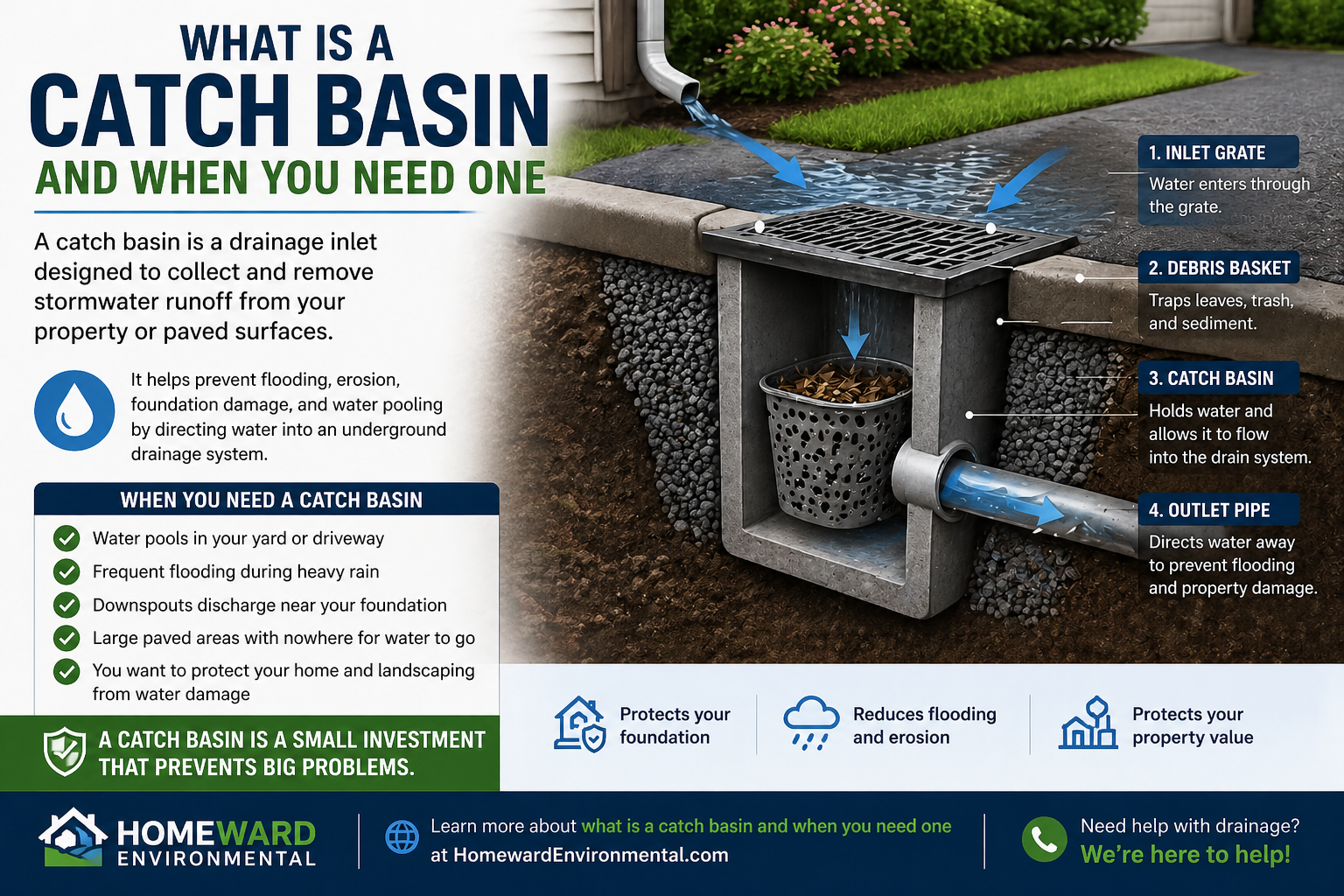
A catch basin is a subsurface drainage structure designed to collect surface water at a specific point and route it underground to a safe discharge location. It has three essential components that work together as a system:
- The grated inlet: A metal or plastic grate set flush with — or slightly below — the surrounding ground surface. The grate allows water to flow in while blocking large debris like sticks, leaves, and landscaping material. The grate is visible at the surface and is the part of the system most homeowners are familiar with.
- The sump chamber: A hollow underground box or cylinder beneath the grate that collects incoming water and allows heavier sediment, sand, and debris to settle to the bottom rather than passing into the outlet pipe. The settled material in the sump chamber is what needs to be cleaned out periodically to keep the system flowing.
- The outlet pipe: An underground pipe connected to the side of the chamber that carries collected water away from the catch basin to a discharge point — typically a curb, storm drain, dry well, or lower area of the property where water can safely disperse.
The key characteristic that distinguishes a catch basin from other drainage structures is the sump — that settling chamber beneath the outlet pipe connection. The sump is what separates catch basins from simple yard drains: it traps debris and sediment before they enter the underground pipe, reducing clogs and extending the life of the drainage system. A basic yard drain without a sump passes everything — including fine sediment — directly into the pipe, where it accumulates and eventually restricts flow.
Catch Basin vs. French Drain: Understanding the Difference
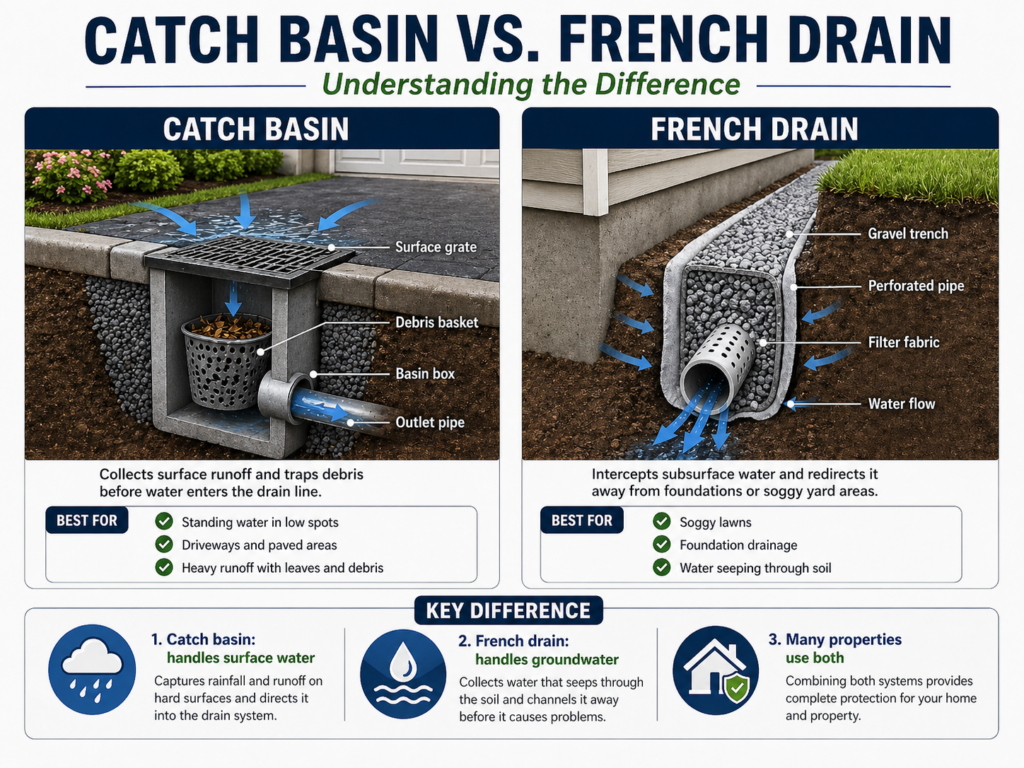
Catch basins and French drains are both underground drainage solutions, and they’re frequently used together — but they do fundamentally different jobs and are the right answer for different problems. Confusing the two leads to situations where homeowners install one when they actually need the other, or install only one when both are required for complete drainage correction.
A catch basin is a point collection system. It captures surface water that flows to and concentrates at a specific location — a low spot, a paved surface without an outlet, or a point where multiple drainage paths converge. It works best when the problem is discrete and localized: water pools in one identifiable spot, and the fix is to give that pooling water a way out.
A French drain is a linear interception system. It collects water along its entire length — both from the soil through the perforated pipe and from the surface through the gravel — and redirects it to a discharge point. French drains are best suited to problems that are widespread across an area, involve groundwater rising from below, or require intercepting water before it reaches a vulnerable zone like a foundation or low-lying lawn area.
In practice, many Indianapolis properties need elements of both. A catch basin at the lowest point of a paved driveway collects concentrated runoff; a French drain along the back fence line intercepts groundwater migrating from a neighbor’s higher property. Both connect to the same underground outlet system, and together they address the full drainage picture that neither could handle alone.
Seven Signs You May Need a Catch Basin
Recognizing the specific symptoms that point toward a catch basin — rather than a different drainage solution — helps you communicate clearly with a drainage contractor and understand why they’re recommending what they are.
- A recurring low spot where water always pools: If the same area in your yard, driveway, or near a hardscape feature collects standing water after every rain, the topography is directing water to that point faster than the soil can absorb it. A catch basin gives that concentrated water a place to go.
- A paved area with no drainage outlet: Driveways, patios, and hardscape features don’t absorb water — they shed it. Without a designed outlet, all of that runoff concentrates wherever the paving slopes lowest. A catch basin at that low point intercepts the water before it runs into the lawn, garage, or foundation.
- Water flowing toward your home from a specific direction: When the grade of your yard channels water toward your foundation from a predictable direction, a strategically placed catch basin intercepts the flow before it reaches the structure.
- Erosion at a concentrated runoff point: Visible erosion channels, bare soil, or displaced mulch at a specific location indicate that water is concentrating and moving with enough velocity to displace material. A catch basin at or upstream of that erosion point reduces the velocity and volume of water before it causes further damage.
- A basement window well that fills with water: Below-grade window wells are natural low points that collect water during heavy rain. A catch basin inside the window well — connected to an underground discharge line — prevents the well from filling and sending water through the window into the basement.
- A swale or drainage channel that terminates without an outlet: Some properties have landscaped swales or graded channels that direct water from one area but have nowhere to send it at the end. A catch basin at the terminus of that swale provides the underground outlet the system is missing.
- Standing water near a retaining wall base: Water that collects at the base of a retaining wall exerts pressure on the wall structure and saturates the soil it’s retaining. A catch basin at the wall base — or a French drain running along it — relieves that pressure and protects the wall’s structural integrity over time.
What a Professional Catch Basin Installation Involves
A catch basin is not a complex structure, but a properly installed one requires planning that goes well beyond dropping a plastic box in a hole. Several decisions made during installation determine whether the system works reliably for decades or becomes a maintenance problem within a few years.
Site Assessment and Outlet Planning
The most important step happens before any digging: determining where the collected water will go. A catch basin that fills with water but has nowhere to drain it doesn’t solve the problem — it just moves the pooling underground. The outlet pipe must route to a discharge point that can handle the volume — a curb, storm drain connection, daylight outlet in a lower area, or dry well — with adequate slope to flow by gravity.
Proper Sizing
Catch basins are available in different sizes, and matching the basin size to the drainage area it serves matters. An undersized basin fills and backs up during heavy rain events; an oversized one is unnecessary expense. The drainage contractor should estimate the contributing surface area and anticipated runoff volume before specifying basin size.
Inlet Placement and Grade
The grate must be set at or slightly below the surrounding grade to capture sheet flow effectively. A grate set too high misses shallow surface water; one set too low creates a trip hazard and may collect more debris than the sump can manage between cleanings. Getting this grade right requires careful attention during installation and should be verified after backfilling settles.
Outlet Pipe Slope
The underground outlet pipe must maintain a consistent downhill slope from the catch basin to the discharge point — typically a minimum of one percent grade (one inch of drop per 10 linear feet) to ensure gravity flow. Flat or reverse-sloped sections allow sediment to accumulate in the pipe and eventually block flow entirely.
Debris Management Features
Quality installations include features that extend service life and simplify maintenance: a deep sump chamber that provides meaningful sediment storage between cleanings, a debris box or cleanout access point that allows the system to be inspected and flushed without excavating, and a grate with appropriate opening size for the debris load expected in that location.
Catch Basin Maintenance: What You Need to Do to Keep It Working
A catch basin is a low-maintenance system — but it is not a no-maintenance system. The sump chamber accumulates sediment, organic material, and debris over time. If the sump fills to the level of the outlet pipe, material begins entering the underground pipe and can cause downstream clogs that are significantly more difficult and expensive to clear than a simple sump cleanout.
For most residential catch basins in Indianapolis, an annual inspection and cleanout — typically in the fall after leaf drop or in the spring after winter debris accumulation — is sufficient to keep the system performing well. The inspection should confirm:
- The sump chamber is less than half full of accumulated sediment and debris
- The outlet pipe connection is clear and unobstructed
- The grate is intact and seated properly at grade
- No roots or vegetation have entered the chamber or pipe
Catch basins installed with accessible cleanout points make this maintenance straightforward. Systems without cleanout access require more effort to inspect properly and may get deferred — which is why Homeward Environmental includes proper access features in every catch basin installation we complete.
How Catch Basins Fit Into a Complete Yard Drainage System
For many Indianapolis properties with complex drainage challenges, a catch basin is one component of a coordinated drainage system rather than a standalone fix. The most effective drainage solutions address water from every source — roof runoff, surface pooling, and groundwater — with the right tool for each.
A complete system for a typical Indianapolis home with drainage challenges might include:
- A catch basin at the low point of the backyard or driveway to collect concentrated surface runoff
- A French drain along the foundation perimeter or back fence line to intercept groundwater before it saturates foundation soil
- Buried downspouts that carry roof runoff underground and away from the foundation rather than discharging at the wall
- A shared underground outlet line that connects all three systems and routes collected water to a curb, storm drain, or daylight discharge point
This kind of integrated approach eliminates the multiple sources of water accumulation that individual solutions leave unaddressed — and it’s the assessment framework Homeward Environmental applies to every drainage inspection we perform.
Frequently Asked Questions About Catch Basins
What is a catch basin in yard drainage?
A catch basin is an underground drainage structure with a grated surface inlet, a sump chamber below that settles debris and sediment, and an outlet pipe that carries collected water to a discharge point. It collects concentrated surface water at a specific low spot and routes it underground, preventing pooling and redirecting runoff away from vulnerable areas like foundations and landscaping.
How is a catch basin different from a French drain?
A catch basin is a point collection device that captures water concentrating at a specific low spot. A French drain is a linear interception system that collects water along its entire length from both the surface and surrounding soil. Catch basins work best for discrete pooling problems; French drains work best for widespread groundwater or water that needs intercepting over a long area. Many properties benefit from both working together as part of a coordinated system.
How do I know if I need a catch basin?
You likely need a catch basin if water consistently pools in the same low spot in your yard, driveway, or near hardscape after rain and doesn’t drain within a few hours. Other indicators include concentrated runoff causing erosion, a paved area with no drainage outlet, water flowing toward your foundation from a specific direction, or a basement window well that fills during rain events. A free on-site drainage assessment provides the most reliable answer for your specific property.
How often does a catch basin need to be cleaned?
Most residential catch basins should be inspected and cleaned at least once per year — typically in fall after leaf drop or spring after winter accumulation. The sump chamber collects sediment and debris over time that restricts flow if not removed. Catch basins with accessible cleanout points make this maintenance quick and straightforward.
Can a catch basin protect my foundation?
Yes, when placed in the right location. A catch basin at a low point near the foundation intercepts surface runoff before it saturates surrounding soil and builds hydrostatic pressure against foundation walls. For comprehensive foundation protection, catch basins work best when paired with French drains and buried downspouts that together address groundwater, surface water, and roof runoff from all contributing sources.
The Right Drainage Solution Starts With Understanding the Problem
A catch basin is a highly effective tool for the right problem — concentrated surface water pooling at a specific location with no natural outlet. It’s not always the only tool needed, and it’s not always the right starting point. What matters most is an accurate read of how water is moving across and through your property, what’s causing it to accumulate where it does, and which combination of systems addresses all the contributing factors.
That’s exactly what Homeward Environmental’s free yard drainage inspection is designed to provide. Our team will assess your property, identify every source of drainage trouble, and recommend a targeted system — whether that’s a catch basin, a French drain, buried downspouts, or a combination — built to protect your yard and your home for the long term. Call us at (317) 608-5033 or schedule your free inspection online and get a clear plan for your drainage problem today.
Comments are closed.