
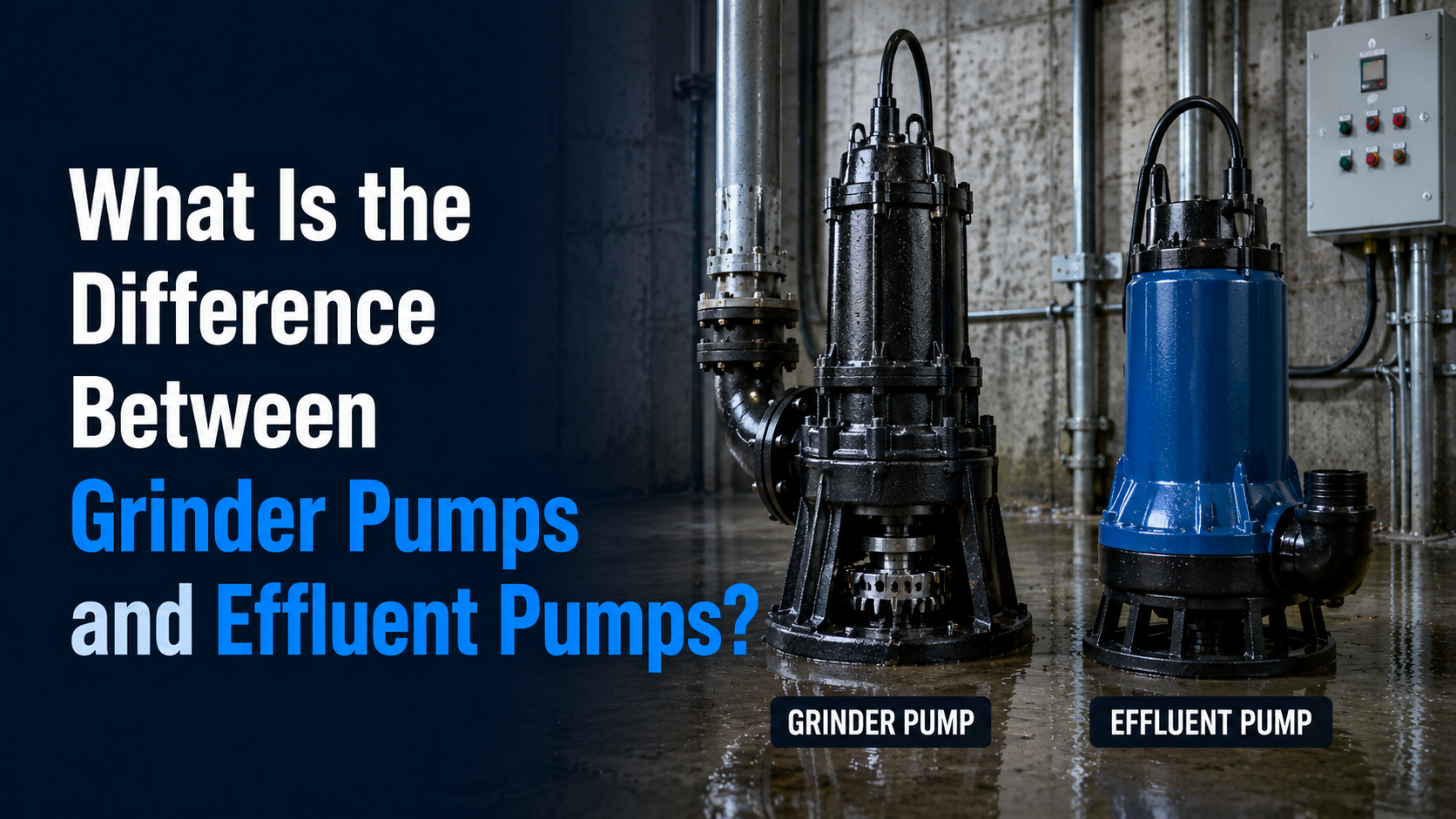

The core difference between grinder pumps and effluent pumps is what they’re built to move: a grinder pump shreds raw sewage and solids into a slurry before pumping it, while an effluent pump moves the clarified liquid that remains after solids have settled in a septic tank. They look similar and both sit submerged, but they serve completely different stages of a wastewater system—and using the wrong one leads to clogs, failures, and expensive repairs.
At Wastewater Supply, one of the most frequent questions we hear from contractors and homeowners is how to tell these two apart. Understanding the grinder pump vs effluent pump distinction is essential before you buy, because each is engineered for a specific job and they are not interchangeable.
This guide explains exactly how each pump works, when to use one over the other, and how they compare on cost, power, and performance—so you can choose the right pump with confidence.
The Core Difference Is How Each Pump Handles Solids
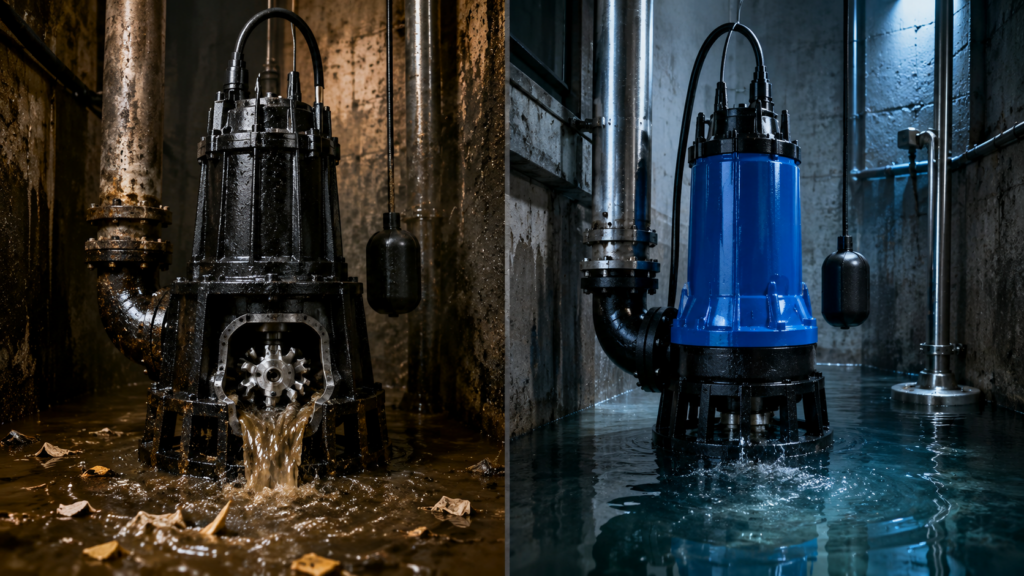
The single most important distinction is solids handling: grinder pumps destroy solids, while effluent pumps avoid them. This one difference drives everything else about how the two pumps are designed and where they’re installed. Knowing which type of waste your system produces tells you which pump you need.
Here’s the fundamental contrast:
- Grinder pumps use a cutting mechanism to shred raw sewage—including toilet paper and soft solids—into a fine slurry that flows easily through small-diameter pipe.
- Effluent pumps are designed to move pre-settled, clarified liquid containing only small suspended solids, typically up to ¾ inch.
Put simply, a grinder pump handles dirty, solids-heavy waste, and an effluent pump handles the cleaner liquid that comes after primary treatment. Sending raw sewage through an effluent pump will quickly clog and damage it.
Grinder Pumps Shred Solids for Pressurized Sewer Systems
Grinder pumps are built for situations where raw sewage must travel under pressure through long or narrow discharge lines. By grinding waste into a slurry, they allow sewage to be pushed through small-diameter pipe over long distances or uphill—something a standard pump cannot do. This makes them essential in low-pressure sewer systems.
Grinder pumps are the right choice when:
- A home or building sits below the level of the municipal sewer main.
- Waste must be pumped a long distance or to a high elevation.
- The property is on a pressurized or low-pressure sewer system.
- The waste stream includes fibrous material that would clog other pumps.
Because they do more work, grinder pumps run at higher pressure (head) and require more horsepower. Wastewater Supply carries grinder pumps from trusted manufacturers like Liberty Pumps, Zoeller, and Myers to match a wide range of residential and commercial pressure-sewer needs.
Effluent Pumps Move Clarified Liquid from Septic Systems
Effluent pumps handle the relatively clean liquid that exits a septic tank after solids have settled out. They are a key component of septic and onsite treatment systems, moving effluent to a drain field, mound system, or drip distribution network. Because they don’t grind, they are simpler, more energy-efficient, and less expensive than grinder pumps.
Effluent pumps are typically used in:
- Septic tank effluent pumping (STEP) systems — moving clarified liquid from the tank to the drain field.
- Mound and elevated drain field systems — lifting effluent to a higher absorption area.
- Drip and pressure distribution systems — delivering effluent evenly across a treatment field.
- Aerobic treatment units — discharging treated liquid.
Because they’re designed for liquid with only small solids, effluent pumps generally deliver higher flow at lower head than grinder pumps. We stock effluent pumps from brands like Goulds Water Technology, Franklin Electric, and Orenco for septic and onsite system applications.
When Should You Use a Grinder Pump vs. an Effluent Pump?
Choose a grinder pump when you’re handling raw sewage under pressure, and an effluent pump when you’re moving clarified liquid from a septic tank. The deciding factor is always the type of waste and the role the pump plays in the system. Matching the pump to the application prevents the vast majority of pump failures.
Use this quick decision guide:
- Is the pump handling raw sewage with solids? If yes, you likely need a grinder pump.
- Is the pump moving liquid that has already passed through a septic tank? If yes, an effluent pump is the right fit.
- Does the waste need to travel far, uphill, or through small pipe under pressure? That points to a grinder pump.
- Are you distributing treated effluent to a drain field or mound? That calls for an effluent pump.
If you’re unsure which category your system falls into, our team can help you identify it based on your tank configuration and discharge setup.
Cost, Power, and Performance Differ Significantly Between the Two
Grinder pumps cost more and use more power than effluent pumps because of the extra work of shredding solids. This difference in design translates directly into differences in price, horsepower, flow, and head. Understanding the trade-offs helps you budget correctly and avoid over- or under-specifying.
The table below summarizes the key differences at a glance:
| Feature | Grinder Pump | Effluent Pump |
|---|---|---|
| Handles | Raw sewage with solids | Clarified septic liquid |
| Solids handling | Grinds into slurry | Small solids up to ¾” |
| Typical application | Pressure sewer systems | Septic / drain field distribution |
| Performance profile | Higher head, lower flow | Higher flow, lower head |
| Horsepower | Generally higher | Generally lower |
| Relative cost | More expensive | More economical |
Selecting based on these factors—rather than price alone—ensures the pump performs reliably for years rather than failing early under the wrong load.
Can You Substitute One Pump for the Other?
No, grinder pumps and effluent pumps are not interchangeable, and substituting one for the other almost always causes problems. Each is engineered for a specific waste stream, and using the wrong pump leads to clogging, motor strain, or premature failure. The cost of replacing a misapplied pump far outweighs any upfront savings.
Two common mistakes to avoid:
- Using an effluent pump for raw sewage — it will clog almost immediately because it can’t process large or fibrous solids.
- Using a grinder pump for simple effluent distribution — it works, but it wastes energy and money on grinding power you don’t need.
When in doubt, confirm the pump type before installation. Wastewater Supply’s team can verify the correct pump for your system so you don’t pay for the wrong unit twice.
Frequently Asked Questions About Grinder and Effluent Pumps
Is a grinder pump the same as a sewage pump?
No. A standard sewage pump passes soft solids through intact, typically up to 2 inches, while a grinder pump shreds solids into a slurry first. Grinder pumps are used for pressurized systems and long discharge runs, whereas sewage pumps are common in standard residential gravity setups. The grinding action is what sets a grinder pump apart.
Can I use an effluent pump for raw sewage?
No, an effluent pump should never be used for raw sewage. Effluent pumps are designed only for clarified liquid with small solids, so raw sewage with large or fibrous solids will clog and damage them quickly. For raw sewage you need either a sewage pump or a grinder pump, depending on the application.
Why are grinder pumps more expensive?
Grinder pumps cost more because they include a cutting mechanism and a higher-powered motor to shred solids and pump against higher pressure. This added engineering and horsepower raises both the purchase price and the operating cost. The trade-off is the ability to move raw sewage through small-diameter pipe over long distances.
How do I know if I have a septic effluent system or a pressure sewer?
If your waste flows into a septic tank and then to a drain field or mound, you have an effluent system that uses an effluent pump. If your raw sewage is pumped under pressure into a shared municipal main, you likely have a pressure sewer system that uses a grinder pump. Checking your tank configuration or asking your installer is the surest way to confirm.
Do grinder pumps require more maintenance?
Grinder pumps can require closer attention because the cutting components wear over time and can dull or jam if non-flushable items enter the system. Regular inspection and avoiding wipes, grease, and debris help extend their life. Effluent pumps, handling cleaner liquid, generally see less wear in normal operation.
Choose the Right Pump for Your System
The difference between grinder pumps and effluent pumps comes down to the waste they handle: grinder pumps shred raw sewage for pressurized systems, while effluent pumps move clarified liquid from septic systems to a drain field. Each is purpose-built, and matching the pump to its role is the key to long-term reliability and lower lifetime cost.
At Wastewater Supply, our team in Noblesville, Indiana carries both grinder and effluent pumps from the industry’s most trusted manufacturers, along with the expertise to help you tell exactly which one your system needs. Reach out before you buy, and we’ll make sure you get a pump that fits your application the first time—keeping your wastewater system running smoothly for years to come.
Comments are closed.